


Commercial electrical systems rarely fail without warning. In most cases, there are specific, recognizable signs in the months or years before a serious problem develops, and property owners and facility managers who know what to watch for can address wiring issues on a planned repair timeline rather than as an emergency. NFPA data shows electrical failure or malfunction is a contributing factor in thousands of non-residential structure fires every year, which is why these warning signs are worth taking seriously rather than working around. M.R. Electricians has provided commercial electrical repair and inspection services throughout the DMV since 1996. Read verified reviews on Google and Yelp, view our Better Business Bureau profile, and learn about our commercial team before calling.
Why Commercial Wiring Ages Differently Than Homeowners Expect
Copper wiring itself is remarkably durable and, correctly installed and undamaged, can remain serviceable for fifty to seventy years. What actually determines whether a commercial building’s electrical system needs attention is rarely the wire itself; it is the components that connect to and protect that wiring. Circuit breakers are mechanical devices with springs and contacts that wear with use and age, typically reaching the end of their reliable service life somewhere between twenty and thirty years. Main panels and switchgear commonly warrant evaluation in the twenty-five to forty year range, as internal bus bar connections oxidize and loosen from decades of thermal cycling every time the building’s load rises and falls. A building’s electrical age should be assessed component by component, not with a single number for the whole system.
5 Warning Signs Commercial Wiring Needs Professional Attention
1. Warm or Hot Outlets, Switches, or Panel Surfaces
A connection point that feels warm during normal operation has developed resistance higher than it should have, usually from a loose termination, corrosion, or a connection that has gradually loosened through years of thermal cycling. That added resistance generates heat right at the connection. This is not a symptom to monitor and see if it gets worse; the same condition that produces warmth today can progress to a burned connection or a fire risk if it continues unaddressed.
2. Circuit Breakers Tripping More Often Than They Used To
An increase in breaker trips over time points to one of several causes: added equipment or load on a circuit not originally sized for it, a breaker whose trip threshold has drifted with age, or a developing fault producing intermittent overcurrent conditions on the circuit. Trips tied to a specific, known cause are less concerning than trips that happen unpredictably or with increasing frequency over recent months, which signal a condition worth diagnosing rather than simply resetting.
3. Flickering or Dimming Lights When Equipment Starts
Lights that dip or flicker when larger equipment, HVAC systems, or machinery starts up indicate voltage drop under load, which can point to undersized wiring for the circuit’s actual demand, a loose connection somewhere upstream, or a panel that is operating closer to its capacity limit than the building’s current equipment load should allow. Occasional minor flicker on old, known equipment is common; a pattern that has become more noticeable over recent months as equipment has been added is worth a professional look.
4. Any Burning or Acrid Smell Near an Outlet or Panel
A burning smell near electrical equipment means insulation or another component is being heated beyond its rated temperature at that moment. This is the one warning sign on this list that calls for immediate action rather than scheduling a convenient appointment: shut off power to the affected circuit or panel if it is safe to do so, and contact a licensed electrician promptly. NFPA data consistently identifies wiring and related equipment as accounting for the majority of fires and losses tied to electrical distribution systems, which is exactly the category a persistent burning smell falls into.
5. Discoloration or Scorch Marks at Outlets, Switches, or the Panel
Visible discoloration, yellowing, or scorch marks around an outlet, switch plate, or inside a panel are physical evidence that heat has already occurred at that point, even if the marks themselves look minor. This is different from a hypothetical risk; it is documentation that a connection has already run hotter than it should have at least once. Buildings constructed or last substantially rewired during the mid-1960s through 1970s aluminum branch wiring era should have this checked with particular attention, since aluminum’s greater thermal expansion compared to copper makes loosened, discolored connections more common in buildings from that period. Our commercial troubleshooting and repair service addresses exactly this kind of diagnostic work.
DIY Monitoring vs. Professional Diagnosis
Noticing these warning signs is something any facility manager or property owner can do without special training, and doing so consistently is genuinely valuable. Diagnosing the actual cause, whether a single loose connection, an aging breaker, an undersized panel, or a broader wiring issue, requires a licensed electrician with the testing equipment and code knowledge to trace the problem to its source rather than treating the symptom. Resetting a breaker repeatedly without investigating why it keeps tripping, or simply avoiding an outlet that runs warm, addresses the inconvenience without addressing the underlying condition.
How M.R. Electricians Diagnoses and Repairs Commercial Wiring Issues
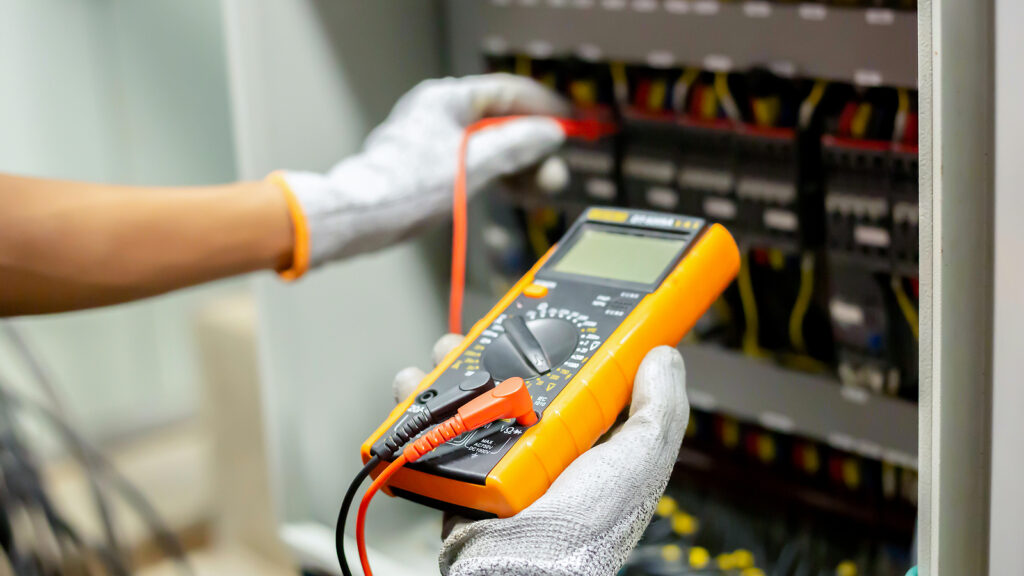
Our licensed electricians investigate each warning sign to its actual cause: testing connection points for resistance and heat, evaluating breaker and panel age against typical service life, and using infrared thermal imaging where appropriate to identify overheating connections that are not yet visible or producing a smell. Depending on what we find, the correct response may be a targeted repair or a broader panel replacement or service upgrade. Our commercial rewiring and system upgrade service and safety inspections and code corrections service cover the full range of what a commercial wiring issue may require, and our preventive maintenance program catches many of these issues before they produce a visible warning sign at all.
Local Context: Permits and Commercial Building Age in the DMV
Commercial electrical repair and rewiring work in Montgomery County is permitted through Montgomery County DPS, and work performed as part of a renovation or tenant fit-out generally must meet current National Electrical Code requirements for the affected areas, even where other parts of an older building retain existing wiring. The DMV’s mix of building ages, from decades-old commercial corridors to recently constructed office and retail space, means M.R. Electricians regularly works across the full spectrum of what these five warning signs can indicate, from a single loose connection to a building-wide upgrade need.
When to Call M.R. Electricians
If your commercial building is showing any of these five warning signs, a professional assessment now is far less disruptive than an electrical failure later. NICET certified. 2025 IEC Award winner. Family-owned since 1996. Read reviews on Google and Yelp, view our Better Business Bureau profile, and call (301) 871-0477 today.
| WHY CHOOSE M.R. ELECTRICIANS | |
| Family-Owned Commercial Electricians Since 1996 | 4.9-Star Rated on Google |
| 5-Star Rated on Yelp | View Our Better Business Bureau Profile |
| NICET Certified Electrical Team | 2025 IEC Award Winner |
| Infrared Diagnostics & Commercial Troubleshooting | Montgomery County DPS Permit Management |
Frequently Asked Questions
What are the most common warning signs that commercial wiring needs repair?
The most common warning signs are warm or hot outlets, switches, or panel surfaces, circuit breakers that trip more often than they used to, lights that flicker or dim when other equipment starts, any burning or acrid smell near an outlet or panel, and discoloration or scorch marks around outlets, switch plates, or panel components. Any one of these on its own is worth having checked. Several appearing together, or any of them appearing repeatedly rather than as an isolated one-time event, points to a wiring or component issue that should be addressed rather than monitored.
Why do outlets or switches feel warm to the touch in my commercial building?
A warm outlet or switch generally indicates that a connection somewhere in that circuit has developed resistance higher than it should have, often from a loose termination, corrosion, or a connection that has loosened over years of thermal cycling as the circuit heats under load and cools when idle. That extra resistance generates heat at the connection point. A switch or outlet that feels warm during normal use is not something to wait on, since the same condition that causes warmth can progress to a burned connection or a fire risk if left unaddressed.
How long does commercial electrical wiring typically last before it needs replacement?
Copper wiring itself, when correctly installed and not physically damaged, can often remain serviceable for fifty to seventy years. The components that connect to and protect that wiring wear out considerably faster. Circuit breakers are mechanical devices with springs and internal contacts that typically have a useful service life of twenty to thirty years, and main panels and switchgear commonly need evaluation or replacement in the twenty-five to forty year range as internal bus bar connections oxidize and loosen from decades of thermal cycling. A commercial building’s electrical system age should be evaluated by component, not by a single number for the whole system.
Does my commercial building have aluminum wiring and why does that matter?
Aluminum branch circuit wiring was commonly used in commercial and residential construction during the mid to late 1960s and into the 1970s, when copper prices spiked. Aluminum expands and contracts more than copper with temperature changes, which can gradually loosen connections at outlets, switches, and panel terminations over years of use, increasing resistance and heat at those points. If your building was constructed or last substantially rewired during this era, it is worth having a licensed electrician confirm whether aluminum branch wiring is present and, if so, whether connection points have been remediated to current standards.
Why do circuit breakers in my building trip more often than they used to?
An increase in breaker trips over time usually points to one of a few causes: added equipment or load on a circuit that was not originally sized for it, a breaker that has aged and whose trip threshold has drifted from its original rating, or a developing fault somewhere on the circuit that is producing intermittent overcurrent conditions. Occasional trips tied to a specific known cause, like running a space heater on an already loaded circuit, are less concerning than trips that happen unpredictably or with increasing frequency, which point to a condition that should be diagnosed rather than simply reset.
Can outdated wiring affect my commercial property insurance?
Some commercial property insurance carriers factor electrical system age and condition into underwriting decisions, and older or unaddressed wiring issues can affect either the availability of coverage or the premium charged, depending on the carrier and the specific condition found. Beyond underwriting, documentation from a licensed electrician showing that wiring issues have been professionally inspected and, where needed, corrected is generally useful information for a property owner to have on file regardless of how a specific policy treats electrical age.
What is the typical lifespan of a commercial electrical panel?
Commercial electrical panels and switchgear commonly reach the point where evaluation or replacement should be considered somewhere in the twenty-five to forty year range, though this varies with usage, environment, and original installation quality. Internal bus bar connections experience thermal cycling every time the building’s load rises and falls, and over decades this cycling can loosen connections and oxidize contact surfaces in ways that are not visible from outside the panel. A panel operating near the end of this range benefits from professional evaluation even without an obvious symptom, since panel-level problems do not always announce themselves clearly before they become serious.
Is a burning smell near an outlet or panel always an emergency?
A burning or acrid smell near an electrical outlet, switch, or panel should always be treated as something to act on immediately rather than monitor, since it indicates insulation or another component is being heated beyond its rated temperature right now. The appropriate response is to shut off power to the affected circuit or panel if it is safe to do so, and contact a licensed electrician promptly. This is different from a one-time smell from a specific known source, like a new appliance’s protective coating burning off during first use, but if there is any uncertainty about the source, professional evaluation is the safer choice.
How do I know if my commercial building’s electrical panel is undersized?
Signs of an undersized panel include lights that dim noticeably when larger equipment starts, frequent need for extension cords because there are not enough circuits for current equipment needs, breakers that trip when multiple pieces of equipment run simultaneously, and a general sense that the building’s electrical capacity has not kept pace with the equipment and technology added over the years. Commercial buildings that were adequately served by a smaller panel decades ago frequently outgrow that capacity as electronic equipment, HVAC upgrades, and other modern loads are added over time. A load calculation performed by a licensed electrician confirms whether the existing panel still has adequate capacity for current and near-term needs.
What does it mean if my commercial building still has ungrounded outlets?
Ungrounded outlets, generally identifiable because they only accept two-prong plugs rather than the standard three-prong grounded plug, indicate wiring that predates modern grounding requirements. Ungrounded circuits do not provide the safety path that a properly grounded circuit does in the event of a fault, increasing shock risk for anyone using equipment plugged into that outlet. Ungrounded outlets are a common finding in older commercial buildings that have not had a full electrical update and are generally addressed as part of a broader rewiring or electrical modernization project.
Do older commercial buildings need to meet current electrical code during a renovation?
Generally, yes, for the portions of the building affected by the renovation scope. When a commercial space undergoes a renovation, tenant fit-out, or significant remodel, the electrical work performed as part of that project typically must meet the current National Electrical Code and Montgomery County amendments, even if other unaffected areas of the building retain older wiring. This is one reason electrical issues often surface during a renovation that were not previously flagged: the permit and inspection process for the renovation brings current code requirements into direct contact with existing conditions.
How often should a commercial building have its electrical system inspected?
A general commercial electrical inspection on a periodic basis, commonly every few years depending on building age and usage, along with an inspection any time warning signs like warm outlets, frequent trips, or unusual smells appear, is a reasonable baseline for most commercial properties. Buildings with heavier electrical loads, older infrastructure, or a documented history of electrical issues benefit from more frequent inspection, including infrared thermal imaging that can identify overheating connections before they become visible or produce a smell. Visit our commercial infrared building inspection service for details on this kind of proactive assessment.
What is the difference between an electrical repair and an electrical system upgrade?
A repair addresses a specific failed or damaged component, replacing a bad breaker, repairing a loose connection, or fixing a section of damaged wiring, and restores the system to its prior working condition. An upgrade increases the system’s capacity or brings it to a higher standard than it previously had, such as replacing an undersized panel with a larger one, adding circuits to support new equipment, or rewiring an area with outdated aluminum wiring to current copper standards. A commercial building showing warning signs sometimes needs a straightforward repair and sometimes needs an upgrade, and a professional assessment determines which applies before work begins.
What permits are required for commercial electrical rewiring in Montgomery County, MD?
Commercial electrical rewiring, panel replacement, and most repair work beyond simple like-for-like component replacement requires a permit from Montgomery County Department of Permitting Services. M.R. Electricians manages the full permit application and inspection process for commercial electrical repair and upgrade projects throughout Montgomery County, so property owners and facility managers do not need to navigate that process separately.
How do I schedule a commercial electrical assessment with M.R. Electricians?
Call M.R. Electricians at (301) 871-0477 to schedule a commercial electrical assessment. Our licensed electricians evaluate warning signs, test panel and breaker condition, and identify whether a repair or a broader upgrade is the right response for your building. We manage Montgomery County DPS permitting for all repair and upgrade work. Serving Rockville, Bethesda, Silver Spring, Gaithersburg, and the full DMV commercial market.
Don’t Wait for a Sixth Warning Sign
Catching a wiring problem on your terms beats an electrical failure on its terms. Call (301) 871-0477 or visit our commercial general electrical service and commercial electrical services to learn more. Serving Rockville, Bethesda, Silver Spring, Gaithersburg, and the full DMV commercial market.