


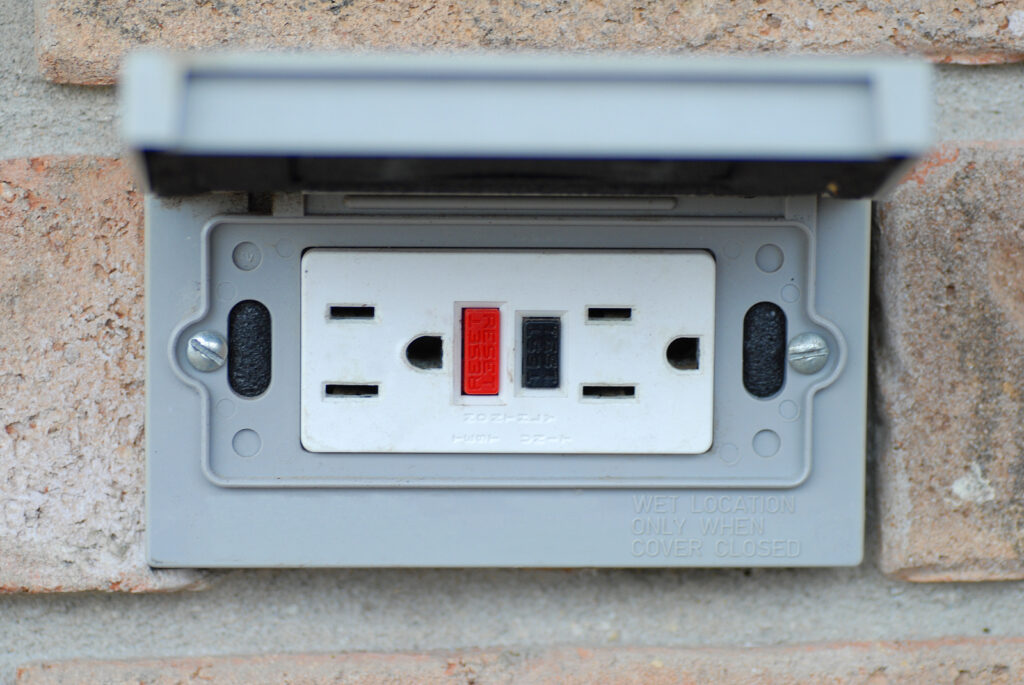
A dock GFCI outlet that will not reset after a storm is not necessarily broken. In most cases, it is a ground-fault circuit interrupter doing exactly what it was built to do: sensing a small current leak, almost always caused by moisture, and cutting power before that leak becomes a hazard in the water around your dock. Understanding why this happens, and when it signals something that needs a closer look, is the difference between a routine reset and a real electrical problem. M.R. Electricians has repaired and inspected dock electrical systems throughout Pinellas County since 1996. Read verified reviews on Google and Yelp, view our Better Business Bureau profile, and learn about our licensed team. Florida Electrical Contractor License I-EC13010503.
What Is Happening When a Dock GFCI Trips
A ground-fault circuit interrupter constantly compares the current flowing out through the hot conductor against the current returning through the neutral conductor. If those two numbers differ by more than a small threshold, typically four to six milliamps for personnel protection, the GFCI interprets that difference as current escaping somewhere it should not, usually through water, corrosion, or damaged insulation, and shuts the circuit off within milliseconds. On a dock, this system is layered: National Electrical Code Article 555 requires GFCI protection on boat hoist outlets for personnel on circuits up to 240 volts, individual ground-fault protection of equipment on shore power receptacles, and ground-fault protection on the feeder and branch circuits supplying the dock as a whole. A storm that pushes rain, spray, or surge into any part of that system can trip one or more of these layers at once.
What Causes GFCI Trips After a Storm
Moisture Intrusion Through Aging Seals
The most common cause by far is water working its way into a receptacle box, boat lift control panel, or junction box through a gasket, cover, or seal that has degraded over time. UV exposure, heat, and years of opening and closing weatherproof covers all wear down the rubber and plastic components that keep these enclosures sealed. Once a small gap develops, wind-driven rain and wave splash during a storm are enough to introduce the moisture that trips a GFCI.
Storm Surge Above the Electrical Datum Plane
NEC 555 requires electrical connections to sit above the electrical datum plane, a reference point tied to the normal range of tidal high water at the site. That standard is built for ordinary conditions, not for an unusual storm surge event that pushes water measurably higher than normal. A dock that is correctly installed to code can still see equipment splashed or briefly submerged during a significant surge, which is one reason a GFCI trip after a major storm deserves a look even on a dock with no history of problems.
Salt Air Corrosion at Connection Points
Every connection point in a dock electrical system, inside a receptacle box, at a boat lift motor terminal, at a panel lug, is exposed to salt-laden air that accelerates corrosion compared to an inland electrical system. Corrosion increases resistance at a connection, and increased resistance can eventually create the kind of small current leak a GFCI is designed to catch, even without any obvious moisture event. This is why a dock in a more exposed, open-water location in Pinellas County may trip more often over time than a similar system in a more sheltered canal.
Lightning-Induced Voltage Transients
Direct or nearby lightning strikes, extremely common during Florida’s summer storm season, can induce brief voltage transients on outdoor wiring that a sensitive GFCI interprets as a fault condition. This kind of trip is often a one-time event tied to a specific storm rather than a sign of an ongoing problem, but repeated transient-related trips over multiple storms can indicate that surge protection at the panel would reduce how often this happens.
Warning Signs That Point to a Real Problem, Not Just a Nuisance Trip
- The outlet will not reset at all, even after the surrounding area has had a full day to dry out.
- The outlet trips again within minutes or hours of a successful reset, with no new rain or splash event.
- Visible corrosion, discoloration, or a burning smell at the outlet, panel, or boat lift motor housing.
- The trip pattern has become more frequent over the past several months, even outside of storm events.
- More than one circuit on the dock trips at the same time during ordinary rain, not just heavy storms.
DIY Reset vs. Calling a Professional
Testing the GFCI’s test and reset buttons, and giving a wet enclosure time to dry before resetting, are reasonable first steps for any homeowner. Opening a dock receptacle box, boat lift control panel, or any wiring connected to the water is a different matter. NEC Article 555 wiring methods, datum plane placement, and layered ground-fault protection are specific enough that incorrect DIY repair on a dock circuit creates a real safety risk, and a permit is generally required for this work in Pinellas County. If a reset does not hold, or if there is any visible damage, the right next step is a call to a licensed electrician rather than continued resetting.
How M.R. Electricians Diagnose and Solve Storm-Related Dock GFCI Trips
Our electricians test each GFCI and GFPE device on the dock, inspect receptacle boxes and boat lift control panels for moisture intrusion and corrosion, check conduit and connections for storm-related movement or damage, and verify the installation against current NEC Article 555 requirements. Where a repair is needed, we handle the Pinellas County Building Services permit process and complete the work to a standard that reduces future nuisance tripping rather than just resetting the immediate problem. Our boat lift and dock electrical service and dock lighting service cover the full scope of what a Pinellas County dock typically needs.
Local Context: Storms, Salt Air, and Pinellas County Docks
Pinellas County sits at the mouth of Tampa Bay, and communities built specifically around canal and open-water access, such as Tierra Verde, have a private dock on nearly every property. That combination, high storm exposure and a very high concentration of dock electrical systems, is why dock GFCI issues are one of the more common storm-season calls M.R. Electricians receives in this market. Coordinating dock electrical work with Duke Energy Florida when a service upgrade is needed, and building every repair to current NEC Article 555 standards, are both standard parts of how we approach this work.
When to Call M.R. Electricians
If a dock GFCI will not reset, trips repeatedly, or you simply want a system checked before the next storm, M.R. Electricians provides the licensed inspection and repair this work requires. Family-owned since 1996. NICET certified. 2025 IEC Award winner. Florida Electrical Contractor License I-EC13010503. Read reviews on Google and Yelp, view our Better Business Bureau profile, and call (301) 871-0477 today.
Frequently Asked Questions
Why does my dock GFCI outlet trip every time it rains or after a storm?
A GFCI outlet trips when it detects even a small imbalance between the current going out and the current coming back, as little as four to six milliamps. Moisture is the most common trigger for this on a dock, because rain, storm surge, or splash from wave action can work its way into a receptacle box through a worn gasket, a cracked weatherproof cover, or an aging seal. The GFCI is not malfunctioning when this happens. It is doing exactly what it is designed to do: cutting power the instant it senses a path to ground that should not be there. A dock GFCI that trips occasionally during heavy weather and resets cleanly once things dry out is usually functioning correctly. One that trips repeatedly or will not reset points to a moisture intrusion problem that needs attention.
Is it safe to reset a dock GFCI outlet myself after a storm?
If the outlet trips during or immediately after a storm and the surrounding area is visibly wet, the safest step is to leave it alone until the receptacle box has had time to dry out, rather than repeatedly pressing reset. Repeated resetting without addressing standing moisture does not fix the underlying issue and can mask a developing problem. If the outlet resets cleanly once dry and does not trip again under normal use, that is a reasonable sign it was a simple moisture event. If it trips again shortly after resetting, will not reset at all, or shows any visible damage, discoloration, or corrosion, it is time to call a licensed electrician rather than continuing to reset it.
What is the difference between GFCI and GFPE protection on a dock?
GFCI, ground-fault circuit interrupter, protects people. It is designed to trip at a very low current threshold, typically four to six milliamps, because that is the range where current can interfere with a person’s heart rhythm. GFPE, ground-fault protection of equipment, protects the electrical system itself and is allowed to trip at higher thresholds. Under NEC Article 555, boat hoist outlets at residential docking facilities require GFCI protection for personnel on circuits up to 240 volts, shore power receptacles require individual GFPE set to open at low trip currents, and the feeder and branch circuits serving the dock require their own ground-fault protection. A dock built to current code has several layers of this protection working together, which is one reason a single moisture event can sometimes trip more than one device.
How does NEC Article 555 apply to residential docks in Pinellas County?
NEC Article 555 is the National Electrical Code section covering wiring and equipment for piers, docks, marinas, and boatyards, and it is the code section Florida’s building code points to for this type of work. It sets requirements for how high electrical connections must sit above the pier deck relative to the water’s electrical datum plane, what ground-fault protection is required for different circuit types, where service equipment can be located relative to the water, and what warning signage a docking facility must display. Because the large majority of homes in Pinellas County’s waterfront communities have a private dock, M.R. Electricians applies Article 555 requirements to every dock electrical project in the county, whether it is new construction, a repair, or troubleshooting after a storm.
Can storm surge or flooding damage dock electrical equipment even if it was installed correctly?
Yes. NEC Article 555 requires connections to sit above the electrical datum plane, a reference point tied to normal high water, but a significant storm surge event can push water well above that normal high-water mark. Equipment that is correctly installed to code for typical conditions can still be temporarily submerged or heavily splashed during an unusually severe storm. This is one reason a dock electrical inspection after a major storm is worthwhile even when the dock was installed correctly and has performed well in the past. Submersion, even brief, can affect connections and components in ways that are not always visible from the outside.
Why does my boat lift GFCI trip but my house GFCI outlets are fine?
Boat lifts sit closer to the water and are exposed to more direct moisture, salt spray, and humidity than most household circuits, so their GFCI protection is more likely to detect a moisture-related imbalance first. Boat lift motors and their control wiring also have more exposed connection points than a typical indoor circuit, and corrosion at those connection points from Pinellas County’s salt air and humidity can develop small current leaks over time that a GFCI will catch. If a boat lift GFCI trips regularly while nearby house circuits do not, the difference usually comes down to environmental exposure at the dock rather than anything wrong with the house wiring.
How often should dock GFCI outlets be tested?
GFCI outlets have a built-in test button, and manufacturers generally recommend testing them monthly to confirm the trip and reset mechanism still functions correctly. For a dock in Pinellas County, testing before the start of hurricane season each year, and again after any major storm has passed through, adds a useful checkpoint beyond the monthly routine. A GFCI that fails to trip when tested, or that will not reset after testing, has reached the end of its service life and should be replaced rather than left in place.
What is electric shock drowning and how does dock GFCI protection prevent it?
Electric shock drowning occurs when electrical current leaks into the water around a dock, marina, or boat, and a swimmer nearby experiences muscle paralysis from the current, which can lead to drowning even in calm water and even when no shock is felt on the skin. NEC Article 555’s GFCI and ground-fault protection requirements exist specifically to detect this kind of current leakage and interrupt it before it reaches a dangerous level in the water. Florida’s State Fire Marshal advises against swimming near docks, marinas, or boat ramps as a general precaution. Properly functioning GFCI protection on a dock is a core safety system, not an optional feature, which is part of why M.R. Electricians treats a tripping GFCI as worth investigating rather than something to just keep resetting.
Can I just replace a tripping GFCI outlet myself, or do I need an electrician?
Replacing a single GFCI outlet is sometimes within reach for an experienced DIYer working on a standard indoor household circuit. Dock GFCI and GFPE devices are a different situation. They are wired to meet specific NEC Article 555 requirements for wet-location equipment, datum plane height, and layered ground-fault protection across the shore power, boat hoist, and feeder circuits. A permit is generally required for this work in Pinellas County, and incorrect installation on a dock circuit creates a real safety risk given the water exposure. M.R. Electricians recommends professional evaluation and, where needed, professional replacement for any dock or boat lift GFCI issue.
Why do older docks trip GFCI protection more often than newer ones?
Older dock electrical systems were often built before current GFCI and GFPE requirements existed, or before enclosure and gasket technology reached its current standard. Gaskets and seals on older receptacle boxes and panels degrade with UV exposure and years of thermal cycling, creating small gaps that let moisture in more easily than a newer, correctly sealed enclosure would. Wiring insulation on an older dock system may also be more brittle or more likely to have small nicks or wear points from years of exposure, both of which can create the kind of minor current leakage a GFCI is designed to catch. A dock built or rewired to current code with quality wet-location components will generally trip far less often than an older system with the same GFCI protection installed.
What should I check on my dock before hurricane season each year?
A pre-season dock check should include testing every GFCI and GFPE device using its test button, visually inspecting receptacle boxes and covers for cracks, brittleness, or gaps in the gaskets, checking boat lift motor housings and control wiring for corrosion or discoloration, confirming that the required electric shock hazard warning signage is present and legible, and verifying that conduit and connections have not shifted or loosened. M.R. Electricians performs this kind of pre-season dock electrical check for Pinellas County homeowners and can address any issues found before storm season puts them to the test.
Does salt air affect how often dock GFCI outlets trip?
Yes. Salt air accelerates corrosion at every metal connection point in a dock electrical system, including inside receptacle boxes, at boat lift motor terminals, and at panel connections. Corrosion increases electrical resistance at these points, and that increased resistance can eventually create small current leaks that a GFCI is designed to detect and interrupt. This means a Pinellas County dock in a coastal or open-water location may see more frequent GFCI activity over time than an equivalent system in a less exposed location, even with the same quality of original installation. Routine inspection and cleaning of connection points helps slow this process.
What permits are required to repair or replace dock electrical wiring in Pinellas County?
Electrical permits for dock and residential work in Pinellas County are issued by Pinellas County Building Services. Dock electrical repair or replacement generally requires a permit, and depending on the scope, work near a seawall or in the water may involve additional review given the proximity to protected waterways. M.R. Electricians manages the permit application and inspection process for dock electrical work throughout Pinellas County, including post-storm repairs.
Does homeowner’s insurance typically cover storm damage to dock electrical systems?
Coverage for storm damage to dock electrical systems varies by policy and carrier, and homeowners should check their specific policy for how it treats dock, seawall, and other waterfront structures separately from the main dwelling. Documentation from a licensed electrician confirming what was damaged and what repairs were made is generally useful for any insurance claim involving electrical work, regardless of how a specific policy is written. M.R. Electricians provides permit and inspection documentation for all completed dock electrical repairs that homeowners can supply to their insurance carrier as needed.
How do I schedule a post-storm dock electrical inspection with M.R. Electricians?
Call M.R. Electricians at (301) 871-0477 to schedule a dock electrical inspection after a storm, or a pre-season check before hurricane season begins. Our licensed electricians evaluate GFCI and GFPE protection, boat lift wiring, dock lighting circuits, and overall system condition against NEC Article 555 requirements, and handle any needed repairs and Pinellas County permitting. Florida Electrical Contractor License I-EC13010503. Serving Tierra Verde, St. Petersburg, St. Pete Beach, Largo, and all Pinellas County waterfront communities.
Schedule Your Pinellas County Dock Electrical Inspection Today
A tripping dock GFCI is worth a professional look, especially after storm season begins. Call (301) 871-0477 or visit our boat lift and dock electrical service and residential electrical services to learn more. Serving Tierra Verde, St. Petersburg, St. Pete Beach, Largo, and all Pinellas County waterfront communities.